Category Archives: Thornton Rust

all about Thornton Rust in Wensleydale

Thornton Rust Bulletin, minutes and history

Thornton Rust Bulletin February 2026

bulletin_febtwentysix (1)

Thornton Rust Parish Meeting March 2025 – draft

trparishmeeting_twentyfive

Thornton Rust Institute Management Committee AGM March 2025 – draft

trinstituteagm_twentytwentyfive (1)

Kennel Field Trust AGM October 2025 – draft

kennelfieldagm_twentyfive

A short history of Thornton Rust

by Pip Pointon

(scroll down for a history of the sheep fold by Mark Sheard)

In 1086 Thornton Rust was mentioned in the Domesday Book as ‘Toreton’. Pat Kent In her book A Walk Round Thornton Rust (published in 1987) wondered if the humps and bumps at the east end of Thornton Rust were the remnants of the original village as one of the fields just east of Manor Farm was called Townends.

There are differing views on where the ‘Rust’ came from. In their book Wensleydale Ella Pontefract and Marie Hartley stated that before the Norman invasion the village was probably owned by a man called Roschil from which ‘Rust’ was derived.

The most popular view, however, is that it came from St Restitutus to whom the medieval chapel in the village was dedicated. The site of that might be in two fields behind Thornton Hall which are called Low Chapel Garth and High Chapel Garth.

The old name for part of Thornton Moor was ‘Brindley’ – ‘a clearing in the wood caused by fire’ and is a reminder that this was once surrounded by the ancient Forest of Wensleydale where kings and knights came hunting.

Thornton Rust developed as a linear village clinging to the south side of a scar – a cliff-like edge of a limestone terrace. Many of the houses were built using stone from the quarry which is near the lime kiln along the green lane from the Outgang on the north side of the vilage. The flags and roofing slates, however, came from the quarries at Burtersett and Stag’s Fell.

By 1301 the village of ‘Thorneton’ had 17 residents listed as paying the lay subsidy (a tax on their goods) to King Edward I. The taxpayers included Johanne Molendinario (a miller) and Henrio Fuller (a fuller) as well as Roberto de Gill and Willemo de Gill. Maybe the de Gills lived at Low Gill which is at the eastern boundary of the village. There is evidence of strip-farming both there and at several other places around the village. By 1673 46 households were listed for the Hearth Tax .

Up until the mid 20th century Thornton Rust was predominantly a farming community. In 1891 23 of the 44 households were involved with farming and 40 men listed that as their main occupation. Six of those were farm servants, one was a farm manager and another was a pig butcher while the others were members of farming families.

The head of one farming family, John Cockburn, stated that he was also a boot maker. There was a mole catcher, a retired gamekeeper, a mason, a carpenter, two stone masons, a dressmaker, two Christian ministers, and 11 domestic servants – plus 47 children under 16-years although a few were already in employment.

In 2011 according to the census there were 100 residents in 63 dwellings in the village. The current ownership is one third each of resident, farming/ex-farming and holiday homes. Holiday home ownership is growing rapidly while the number of children and farm holdings have decreased.

Built heritage:

It is thought that East End House is one of the oldest buildings in the village. Until the 1840s this was the Manor Inn which had a brew house behind it. There was also a large bread oven.

Part of Thornton Hall, which is in the centre of the village, dates back to the 17th century and it is thought a medieval manor house once stood there. In the 18th and 19th centuries it was the home of the Chapman family who were the principal landowners in the area. The date inscribed over the elaborate doorway is 1672.

It is likely that at least two of the houses in the centre of the village began life as thatched cottages – Manor House on the east side of the institute, and Plane Tree House opposite it.

The outlines of the heads of tall windows on the upper level of Havenhurst at the east end of the village recall its earlier life as a Calvinistic Chapel. This was established in 1827 by John Tomlinson, a gentleman of Thornton Rust, with a school room on the ground floor.

The school closed in 1948 but not before Pontefract and Hartley had visited it. Only children up to 10-years-old were admitted and the two ladies commented: “Entering it you feel to have stepped back several generations. Maps line the walls, and when we saw it there were open copy-books on the desks. Only simple subjects are taken, but the children learn them well.”

Past the green at the east end there is a large house set back on the north side called Parson Hill. This was once a dissenting chapel and a Sunday School. It later became the hub of village life where village events were held. It is now a private house.

In front of it is The Bield which, in the 19th century, was the home of a wheelwright. Next door is ‘The Post Office’. This was once a flourishing shop and post office but became a private house in the late 20th century.

Outside West View Farm at the west end of the village there is a stone tablet inscribed with two Hebrew words and then: ‘Jehovah my Banner, Particular Baptist Chapel 1836’. By 1840, however, the chapel was sold. Pat Kent states that the building at the back which was used for worship and as a Sunday School became (like Parson Hill) a place where meetings and dances were held.

The village institute, which was built in 1924, provides a welcoming venue for meetings and events thanks to the efforts of the volunteer committee.

Many villagers have also worked hard to maintain The Mission Room which, since the late 19th century, has been in the upper floor of a traditional barn.

At the east end of the village there is Thornton Lodge – a five-star country house in what was originally built in 1909 as the summer retreat of a cotton baron.

History of the Sheepfold

by Mark Sheard

The sheep dip is believed to have been originally set up after the Enclosure Act 1873 for the tenant farmers of Thornton Rust Hall, the Lords of the Manor.

The fold had two functions

1.         The sheep dip

The dip is made up of three parts. The first is the water boiling pots, the second the dip bath and the third the draining area and drip collection tank.

The process was as follows: The two large cast iron pots located over two small fire grates were filled with clear water the night before dipping. The fires were lit and lef to heat the water overnight. Originally the pots had a tin roof and chimney over them but they are now lost.

The following day a mixture of proprietary chemicals was cut from a large block, placed in a bucket and hot water was added. The mixture was stirred and then poured into the sheep dip bath which had been partly filled with stream water from the adjacent beck. The stream was blocked with turf to fill a small trough which remains in situ today. From the trough an underground pipe led to the dip bath.

Sheep were led into the enclosure adjacent to the dip and then led singly into the dip bath. A man stood in a manhole recess to the side of the bath to push the sheep under the surface. The sheep then left the bath to a third enclosure where they dripped surplus water back into a shallow collection tank which fed back to the main dip bath. After dripping the sheep were released out into what is now the car park area and led away.

A small fee was paid per head of sheep dipped and administered by the secretary of the dipping fund. Monies raised were used to maintain the structure and pay for consumables.

Around 15 farmers used the facility in its heyday.

2.         The sheep wash and clipping area.

This was a separate exercise and was undertaken to wash out lanolin and ticks (and salve) from the fleeces before clipping. The stream was blocked at the lower end of the sheep dip site by insserting a wooden slab between the two large stone slabs set in the stream and still in situ today. This created a large pool into which the sheep were driven and individually washed.

This practice stopped in the early 1900s. One reason was that the wool processors realised that lanolin was a valuable product which they preferred to be left in the fleeces to process themselves.

The sheepfold remained in use until the 1970s when it was largely abandoned. It is still used occasionally as a clipping and dosing area.

On the left-hand side near the entrance to the car park a small stone building provided storage for peats collected from the moors by villagers. The building has long been demolished and nothing remains.
In 1086 Thornton Rust was mentioned in the Domesday Book as ‘Toreton’. Pat Kent In her book A Walk Round Thornton Rust (published in 1987) wondered if the humps and bumps at the east end of Thornton Rust were the remnants of the original village as one of the fields just east of Manor Farm was called Townends.

There are differing views on where the ‘Rust’ came from. In their book Wensleydale Ella Pontefract and Marie Hartley stated that before the Norman invasion the village was probably owned by a man called Roschil from which ‘Rust’ was derived.

The most popular view, however, is that it came from St Restitutus to whom the medieval chapel in the village was dedicated. The site of that might be in two fields behind Thornton Hall which are called Low Chapel Garth and High Chapel Garth.

The old name for part of Thornton Moor was ‘Brindley’ – ‘a clearing in the wood caused by fire’ and is a reminder that this was once surrounded by the ancient Forest of Wensleydale where kings and knights came hunting.

Thornton Rust developed as a linear village clinging to the south side of a scar – a cliff-like edge of a limestone terrace. Many of the houses were built using stone from the quarry which is near the lime kiln along the green lane from the Outgang on the north side of the vilage. The flags and roofing slates, however, came from the quarries at Burtersett and Stag’s Fell.

By 1301 the village of ‘Thorneton’ had 17 residents listed as paying the lay subsidy (a tax on their goods) to King Edward I. The taxpayers included Johanne Molendinario (a miller) and Henrio Fuller (a fuller) as well as Roberto de Gill and Willemo de Gill. Maybe the de Gills lived at Low Gill which is at the eastern boundary of the village. There is evidence of strip-farming both there and at several other places around the village. By 1673 46 households were listed for the Hearth Tax .

Up until the mid 20th century Thornton Rust was predominantly a farming community. In 1891 23 of the 44 households were involved with farming and 40 men listed that as their main occupation. Six of those were farm servants, one was a farm manager and another was a pig butcher while the others were members of farming families.

The head of one farming family, John Cockburn, stated that he was also a boot maker. There was a mole catcher, a retired gamekeeper, a mason, a carpenter, two stone masons, a dressmaker, two Christian ministers, and 11 domestic servants – plus 47 children under 16-years although a few were already in employment.

In 2011 according to the census there were 100 residents in 63 dwellings in the village. The current ownership is one third each of resident, farming/ex-farming and holiday homes. Holiday home ownership is growing rapidly while the number of children and farm holdings have decreased.

Built heritage:

It is thought that East End House is one of the oldest buildings in the village. Until the 1840s this was the Manor Inn which had a brew house behind it. There was also a large bread oven.

Part of Thornton Hall, which is in the centre of the village, dates back to the 17th century and it is thought a medieval manor house once stood there. In the 18th and 19th centuries it was the home of the Chapman family who were the principal landowners in the area. The date inscribed over the elaborate doorway is 1672.

It is likely that at least two of the houses in the centre of the village began life as thatched cottages – Manor House on the east side of the institute, and Plane Tree House opposite it.

The outlines of the heads of tall windows on the upper level of Havenhurst at the east end of the village recall its earlier life as a Calvinistic Chapel. This was established in 1827 by John Tomlinson, a gentleman of Thornton Rust, with a school room on the ground floor.

The school closed in 1948 but not before Pontefract and Hartley had visited it. Only children up to 10-years-old were admitted and the two ladies commented: “Entering it you feel to have stepped back several generations. Maps line the walls, and when we saw it there were open copy-books on the desks. Only simple subjects are taken, but the children learn them well.”

Past the green at the east end there is a large house set back on the north side called Parson Hill. This was once a dissenting chapel and a Sunday School. It later became the hub of village life where village events were held. It is now a private house.

In front of it is The Bield which, in the 19th century, was the home of a wheelwright. Next door is ‘The Post Office’. This was once a flourishing shop and post office but became a private house in the late 20th century.

Outside West View Farm at the west end of the village there is a stone tablet inscribed with two Hebrew words and then: ‘Jehovah my Banner, Particular Baptist Chapel 1836’. By 1840, however, the chapel was sold. Pat Kent states that the building at the back which was used for worship and as a Sunday School became (like Parson Hill) a place where meetings and dances were held.

The village institute, which was built in 1924, provides a welcoming venue for meetings and events thanks to the efforts of the volunteer committee.

Many villagers have also worked hard to maintain The Mission Room which, since the late 19th century, has been in the upper floor of a traditional barn.

At the east end of the village there is Thornton Lodge – a five-star country house in what was originally built in 1909 as the summer retreat of a cotton baron.

History of the Sheepfold 

by Mark Sheard

The sheep dip is believed to have been originally set up after the Enclosure Act 1873 for the tenant farmers of Thornton Rust Hall, the Lords of the Manor.

The fold had two functions

The sheep dip
The dip is made up of three parts. The first is the water boiling pots, the second the dip bath and the third the draining area and drip collection tank.

The process was as follows: The two large cast iron pots located over two small fire grates were filled with clear water the night before dipping. The fires were lit and lef to heat the water overnight. Originally the pots had a tin roof and chimney over them but they are now lost.

The following day a mixture of proprietary chemicals was cut from a large block, placed in a bucket and hot water was added. The mixture was stirred and then poured into the sheep dip bath which had been partly filled with stream water from the adjacent beck. The stream was blocked with turf to fill a small trough which remains in situ today. From the trough an underground pipe led to the dip bath.

Sheep were led into the enclosure adjacent to the dip and then led singly into the dip bath. A man stood in a manhole recess to the side of the bath to push the sheep under the surface. The sheep then left the bath to a third enclosure where they dripped surplus water back into a shallow collection tank which fed back to the main dip bath. After dripping the sheep were released out into what is now the car park area and led away.

A small fee was paid per head of sheep dipped and administered by the secretary of the dipping fund. Monies raised were used to maintain the structure and pay for consumables.

Around 15 farmers used the facility in its heyday.

The sheep wash and clipping area.
This was a separate exercise and was undertaken to wash out lanolin and ticks (and salve) from the fleeces before clipping. The stream was blocked at the lower end of the sheep dip site by inserting a wooden slab between the two large stone slabs set in the stream and still in situ today. This created a large pool into which the sheep were driven and individually washed.

This practice stopped in the early 1900s. One reason was that the wool processors realised that lanolin was a valuable product which they preferred to be left in the fleeces to process themselves.

The sheepfold remained in use until the 1970s when it was largely abandoned. It is still used occasionally as a clipping and dosing area.

On the left-hand side near the entrance to the car park a small stone building provided storage for peats collected from the moors by villagers. The building has long been demolished and nothing remains.
 

David Pointon and a special celebration at Thornton Rust

QuadBike2s

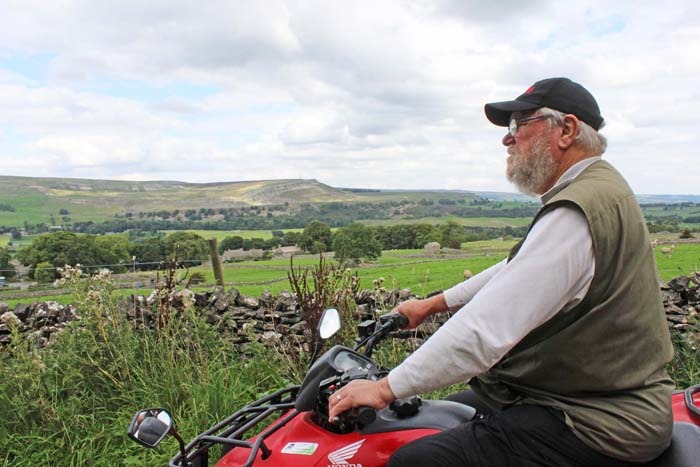
Villagers at Thornton Rust raised their glasses to my husband, David Pointon, on Saturday June 1. He had died just two weeks before the 20th anniversary celebration of the founding of the village’s Kennel Field TrustAbove: David on his quad bike overlooking Wensleydale from near the Kennel Field.

At that celebration the villagers also raised their glasses to the continued prosperity of what is often known as the Millennium Field. The Kennel Field Trust was set up to bring that field, once used by the Wensleydale Harriers for kennelling its hounds, into public ownership and to restore it.

The Yorkshire Dales Millennium Trust (YDMT)  had supported the Kennel Field Trust  then – and, as part of its own 20th anniversary celebrations awarded a further grant of  £4,000.

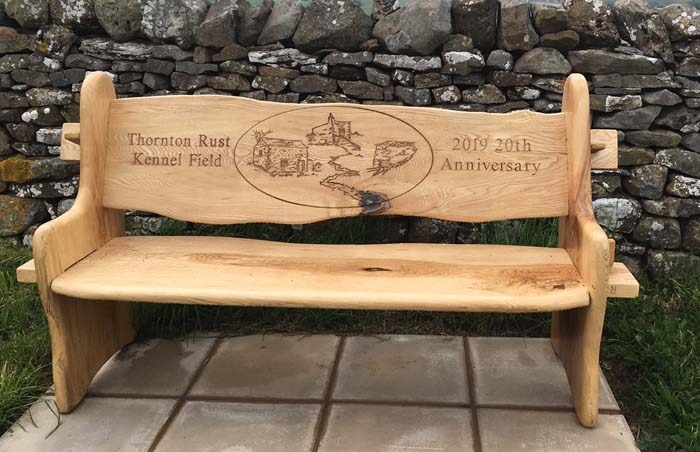
At the party in Thornton Rust village hall on Saturday the chairman of the Kennel Field Trust, John Dinsdale, explained that this grant was used to install new fencing, reinstate the cooking area of the mash house, order an interpretation board and install a new bench.

Deborah Millward, the Trust’s secretary, told those who had gathered in the village hall: “Dave [Pointon] had been associated with the Kennel Field for at least 15 years and for much of that time he was a trustee.

“I think what appealed to him and the rest of us was the ethos of the Kennel Field: that it was owned by the community; that the villagers could freely wander wherever they wanted there – enjoy the flowers, enjoy the birds, and enjoy the view.”

She added that he was a very good artist and had designed the artwork for the new bench. “Sadly he hasn’t been to see it but he did have photographs. I think he would be wanting us to celebrate and so I would like you to raise your glasses in joyful memory to Dave.”

His wife, Pip, said later: “As his mobility was becoming more and more restricted he had bought a quad bike so that he could still visit the Kennel Field and go up onto the moors. He loved the Yorkshire Dales and still wanted to enjoy them.”

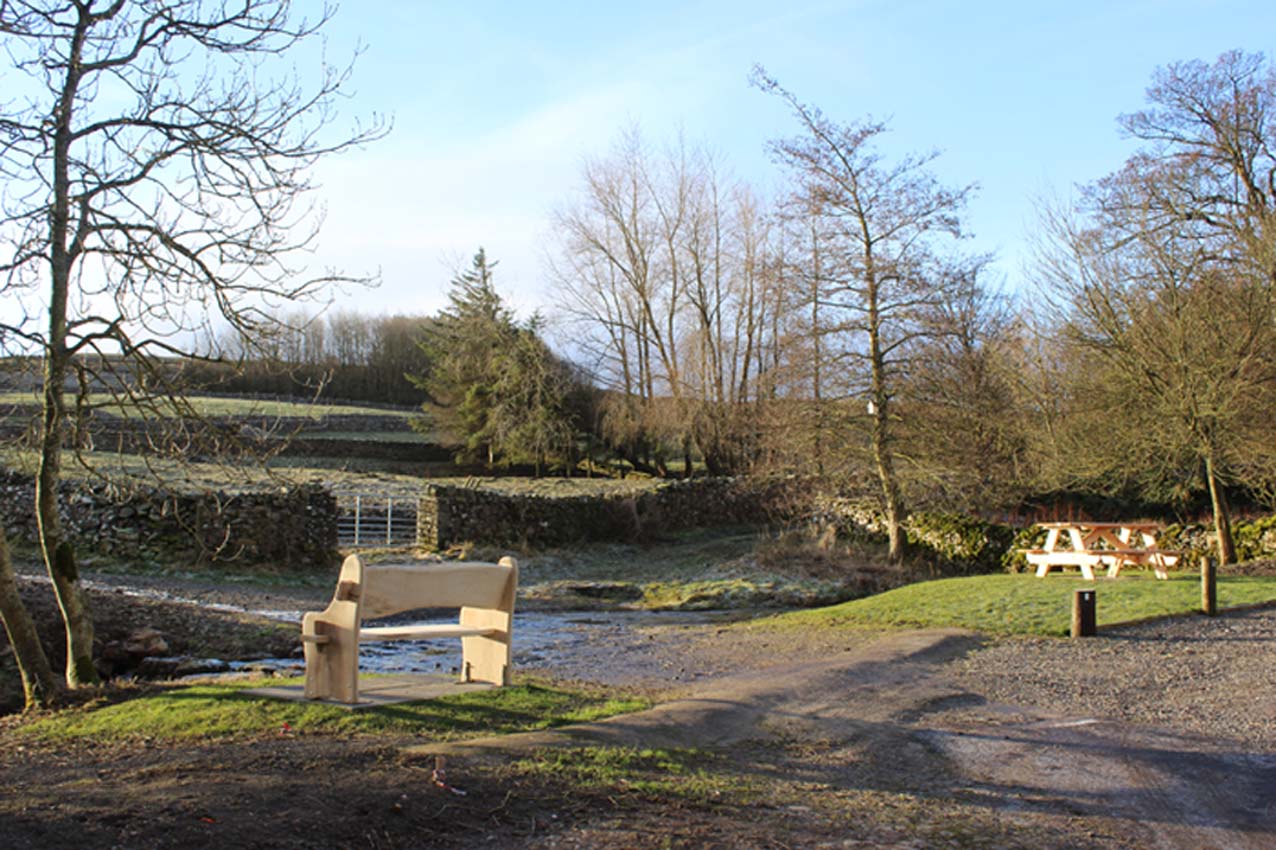
Below: the new bench with David’s artwork engraved on it.

kennelfield_benchc

David was an Aysgarth and District parish councillor for Thornton Rust and a member of its village hall committee.

He was chairman of Northallerton branch of the Institute of Advanced Motorist and a Qualified Observer (trainer).

He was on the Representative Group for West Burton CofE School and then a member of the Bainbridge, Askrigg and West Burton Federation of Schools Working Party.

Before he retired to Wensleydale in 2001 he was head of service in Norfolk for children and young people with sensory impairment. He set up that service in 1983 and through it children were brought from boarding schools for the blind and visually impaired into main stream education. This led to him being a representative for teachers of the blind and visually impaired on the Special Educational Needs National Advisory Council and being a trustee of a charity aimed at helping such children in The Gambia.

After retirement he made several overland journeys to The Gambia to deliver equipment to the only school for the blind and visually impaired in that country and to run training classes for teachers working with them. David and I also introduced Heather Ritchie of Rug Aid to that school and it is wonderful to see how her work in The Gambia has developed since then.

He also served as a governor at Risedale School until it was converted into an academy and at Leeming Bar CofE Primary. He was involved for a time with Reeth School through the Quaker Trust as well as being a governor for six years at Breckenbrough School at Sandhutton run by North Yorkshire Quakers.

His funeral will be at Gorleston Crematorium as he died on his boat on the Norfolk Broads and as his daughter and some of his closest friends live in Norfolk.

Later there will be a Memorial Meeting at Bainbridge Quaker Meeting House. As one of those who worked with him in the Sensory Support service commented: “His discovery of the Quaker faith gave him an anchor later in life and I know he loved the life ‘up North’ surrounded by such magnificent countryside.”

Pip’s message on Facebook on May 21:

Sadly my wonderful husband, David, died suddenly on Sunday – [sitting] in his favourite place on his boat on the Norfolk Broads. I am so grateful to the strangers who helped me with CPR, to the paramedics and ambulance staff who worked so hard to bring him back, to Eddie my son for driving from London to be with me that evening and for being a tower of strength, and to the Bondi family, especially Jim and Sue for caring for me so well at their home.

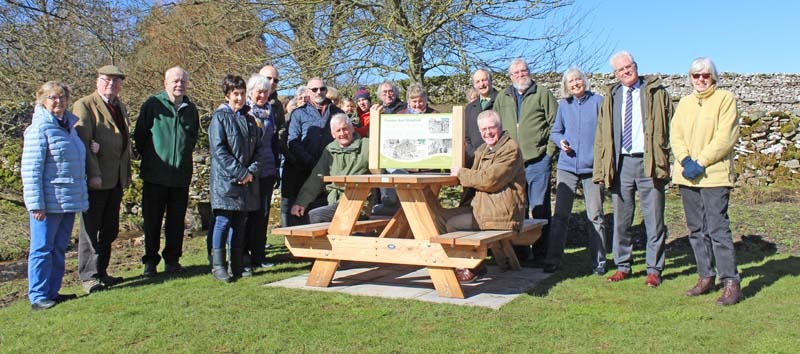
Presentation at Thornton Rust

group

A year-long project to renovate the area in and around the car park and to create a picnic area at the Outgang in Thornton Rust has come to a successful end with the installation of an interpretation board.

The board, which tells the story of how West Beck was used in the past to wash sheep, was included in a grant from the Yorkshire Dales National Park Authority’s Sustainability Fund.

“These small projects are so exciting and so memorable,” commented YDNPA officer Andrea Burden when she was in Thornton Rust to celebrate with villagers.

The YDNPA’s Champion for Sustainable Development, Chris Clark, presented Aysgarth and District Parish Council with a cheque for £3,740 from the fund towards the cost of the refurbishment.

He said: “It is absolutely fantastic that communities like Thornton Rust have come together to improve this facility and the environment.”

In response Thornton Rust parish councillor David Pointon said: “I want to thank all those who have been so deeply involved in this and the YDNPA for its support.  I know most people in the village have contributed in one way or another – everybody has done their little bit which just shows that this village is the best one to live in in the Dales!”

The project began in March 2017 when the state of the Outgang car park was discussed at Thornton Rust Parish Meeting. Cllr Pointon commented that it was more like a patch of waste land,  very uneven, and with no proper surface for parking on.

A team of volunteers was formed, led by Mark Sheard, to organise and carry out the work. The initial clearance work was done with the support, on a voluntary basis, of Tim Kilvington with his digger.

During the summer of 2017 some of the villagers worked very hard not just within the parking area but also around West Beck and the lane leading to the moors. In doing so they revealed features of the village’s agricultural and social past including how a pool was created in the beck up until the beginning of the 20th century so that sheep could be washed before being clipped.

Eleanor Scar and her brother Owen Metcalfe provided information about that and had photographs taken by Dr Werner Kissling of a re-enactment in the early 1960s. Copies of some of those photographs are on the interpretation board.

The full story of that re-enactment is told in the November 2017 edition of Now Then which is available at the Dales Countryside Museum in Hawes, price £2.

Mr Sheard and Martyn Donno have also restored the old pots which were used for boiling up the dipping mixture used in the 1960s.

Mr Donno commented: “The [National Park] had the vision to see that it was worth doing and put their trust in us – we are grateful for that. It is quite interested in the sheep dip because there are few of those left intact. So we wanted to show how it used to work.”

The grant from the YDNPA also made it possible to install a picnic table and a bench beside West Beck.

From the car park there is a bridleway to Thornton Rust Moor and then, via a permissive footpath, to the site of an ancient settlement at the top of Addlebrough.

For those who don’t want to go so far there is a gentle walk up to the old lime kiln and into the Kennel Field where there is a seat overlooking the village.

For more about the Outgang project click here.


Thornton Rust Outgang project

picnicarea_prep

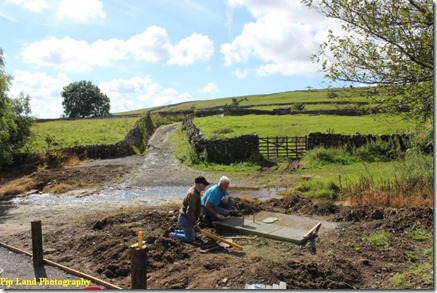
The Outgang at Thornton Rust is the perfect place to start a walk along the bridleway to Thornton Rust Moor and then, via a permissive footpath, to the site of an ancient settlement at the top of Addlebrough.  For those who don’t want to go so far it is but a gentle walk up to the old lime kiln and into the Kennel Field where there is a seat overlooking the village. (Above: preparing the site for a picnic bench, with the bridleway on the other side of the beck. )

During the summer of 2017 some of the villagers have worked very hard to create a new car parking area at the Outgang and in doing so revealed features of the village’s agricultural and social past. (Click on the picture to see more photos of the work at the Outgang. )

They were grateful for a grant from the Yorkshire Dales National Park Authority’s sustainability fund which will also cover the cost of preparing and installing an interpretation board. This will show how West Beck was dammed each year up until the beginning of the 20th century to form a pond where sheep could be washed to remove salve and lanolin before being clipped.

The salve, according to Eleanor Scarr, was a mixture of rancid butter and tar which helped to stop the sheep being struck by flies. In this year’s Now Then (the annual magazine of the Friends of the Dales Countryside Museum) there is an interview with her and her brother, Owen Metcalfe, about how farmers like their father, Sidney Metcalfe, used the beck – and how, on a hot summer’s day they would dam it so that the children could play in the water. Copies of the magazine are on sale (£2 each) at the museum in Hawes.

Below: the benches installed in December 2017

Ecologists congratulate the villagers

In November 2017 Deborah Millward wrote:

Last month I led a group of ten ecologists a short walk round the village. We discussed the West End Bank, which had just been cut and cleared, much to their approval.

I then showed them the new car park area up the Outgang describing the morass of docks and ground elder that had previously featured there. The consensus was that even if the “dreaded weeds” had not been defeated, the eventual increase in biodiversity was worth the effort. They greatly appreciated the improved facilities.

In East Lane I explained the problems we had experienced with water eroding the track. The new drain, funded by the Parish Wildlife Scheme, had gone in and the track could be restored. The Catchment Sensitive Farming Scheme was a possible source of funding for keeping silt out of the stream.

We discussed how best to manage the grazing to protect the flower-rich sections. Their advice was to graze in the autumn with cattle to remove the bulk of the year’s growth, then to follow this with sheep at some time in the winter months.

In the Kennel Field I showed them photos of the site before work started almost 20 years ago. The present day scene of trees and honeysuckle created a good impression, especially with the RSPB person. Sadly I had to report that black grouse no longer used the field’s hawthorn trees. The group were full of praise for the effort villagers were making to conserve and restore wildlife and wished us luck with East Lane.

Thornton Rust’s Kennel Field

PLKennelField2

The chairman of Aysgarth and District Parish Council, John Dinsdale, was delighted in October 2017 when Thornton Rust ’s  Kennel Field Trust was highly commended at the Yorkshire Dales Millennium Trust awards ceremony. The award included £4,000 which, he said, would cover the cost of more environmental work at the Kennel Field.  My article (below) about the Kennel Field which was published in The Dalesman in 2014.

The Kennel Field

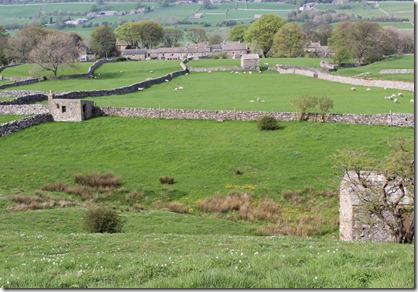
Above Thornton Rust there is a very special place to sit and enjoy the beauty of Wensleydale – and thanks to the hard work of many of the villagers there are no ugly blemishes on that landscape. Instead the Kennel Field is bedecked with wild flowers in Spring. (Above: Looking down from the top of the Kennel Field with the restored barn on the right, the mash house below it, and Thornton Rust in the distance. Click on this picture to see more photos)

Deborah Millward was so excited in November 2014 that she had to tell everyone connected with that field: “Hurray! Today a black grouse was feeding on one of the old hawthorn trees.” Deborah, who had just retired as chair of the Yorkshire Dales Biodiversity Forum, had a very different view of the Kennel Field when she first saw it in 1983. She and her husband, Ian, had walked up to field next to the lime kiln on the south side of the village. Looking back towards Carperby Moor she thought: “Wow – this is a beautiful place”.

But then she glanced downwards and saw the kennels which had been built as the summer retreat for the Wensleydale Hounds in the 19th century. “They were a real blot on the landscape,” she said. The other two buildings in the field – the mash house and a traditional barn – were also semi derelict.

When she studied the field more closely, however, as part of her moving from being a microbiologist in the food and water industries to a botanist, she realised that it was home to over 120 species of plants. “That is quite impressive. A lot of pastures are not as nearly as diverse,” she explained. “The field had never been improved and there is a wet bit with marsh marigold and meadow sweet. Probably the rarest thing in there is the flat sedge. That has declined nationally and the Kennel Field is a hot spot in the Yorkshire Dales National Park.”

She began dreaming of protecting the field and discussed her ideas with some of the villagers, including Aysgarth and District parish councillor and local farmer, John Dinsdale. As a child he had played there with his friends and so the idea of the field being special was a novel one.

What did concern him was that the old kennels were becoming so unsafe. “They were a danger to kids – because they used to play on the roof and that could have fallen through.” And they might then have been impaled on the old railings.

He added:“The barn and the mash house were going to fall down if they didn’t have something done to them. It’s a lovely spot now and it’s canny you can go up there and sit on the seat and enjoy it.”

That transformation came about because Deborah realised that funds might be available through the Yorkshire Dales Millennium Trust (YDMT) after it was set up in 1996. But first she needed the landowner’s permission to demolish the kennels. To her surprise the owner, Arthur Metcalfe, suggested they should buy the field. And so the Kennel Field Trust was born with John as its chairman. The many hours he, Deborah and other members of the management group spent working in that field counted as match funding.

Deborah put the project forward to the YDMT to be included in its application to the Millennium Commission. “The Kennel Field ticked all the boxes for the Millennium Commission,” explained David Sharrod, the YDMT director. “It came from the community, it was wild life and it was restoring historical sites. It was one of the first we managed to fund and certainly one of the first that we made work.”

The YDMT not only allocated some of the Lottery funds to the Kennel Field Trust but also obtained some European funding for the project. In addition to a small grant from the Yorkshire Agricultural Society the Kennel Field Trust also received a grant from the ESA Conservation Plan and that was used to purchase the field.

But back in Thornton Rust it wasn’t all plain sailing. There were some who were very suspicious and were worried that the Kennel Field would become a financial burden on the small community. One who expressed his doubts was Colin Day. “Afterwards I felt I had done wrong and I thought I would chip in and do a bit,” he said.

He certainly did chip in for he set himself the task of cleaning the lime mortar off of 100 bricks a day. “I chipped away at many, many thousands. It was snowing at times and it was jolly cold.” John would regularly drive a tractor to the field to knock down more of the roofing and Colin helped to demolish the walls. Others did help with cleaning the bricks and slowly they accumulated 8,800 which were sold to the builder who was restoring the barn.

That bit of extra money helped as Deborah hadn’t budgeted for buying good quality Northerly calcareous mix of seeds to restore the land where the kennels had been. The verges along the lane to the village were also reseeded as so much had been swept away by flooding before the new culvert was installed. The breeze blocks from the kennel runs were crushed and used to create the bridge over that culvert.

The rich mix of wild flowers in the Kennel Field had come about because Arthur Metcalfe had only grazed cattle there. Sheep would have damaged many of those plants explained John. Now a local farmer grazes her cattle there just twice a year the first period being for six weeks from June 1 – after that glorious display of wood anemones, marsh marigolds, cowslips and early purple orchids.

The cattle return after the summer flowering of plants like scabious and ox-eye daisies. “They graze it again in the autumn just to take all the growth off. It would just form a mass of dead material and the little seedlings wouldn’t be able to get through,” Deborah explained.

With so little grazing the field could easily become overgrown with hawthorn bushes if Deborah didn’t regularly weed out newcomers. Ragwort has no place there for the members of the management group pulled so many out in the first few years after the Kennel Field was officially opened in 2000. These were stored in the mash house until they were dry enough to burn.

The management group organises a maintenance day each Spring when woodwork is treated, injurious weeds like dock are pulled out and there is a general tidy up. Other jobs have included putting up a fence to stop calves going into the lime kiln and damaging it.

There wasn’t that much to do until someone realised a few years ago that a corner of the barn was sinking. John explained that the marshy area was increasing in size as it was being fed by a stream flowing down the field near the barn. So some of the villagers installed a drainage pipe.

“We do need a small steady income to maintain the two buildings, the gates and some fencing,” Deborah commented. That income has come from the ESA scheme since the field was bought but that ended in 2014. So now those on the management committee are looking for ways to cover this shortfall. For they are determined that many others in the future will be able to sit on that seat and share in that Wow factor.


Deborah reported in November 2017  that sadly the black grouse was no longer using the field’s hawthorn tree.